
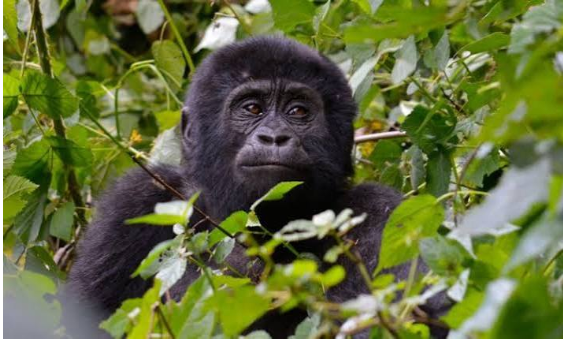
Africa offers two very different kinds of wildlife encounter. One happens on foot, in misty forest, an hour from a family of mountain gorillas or a troop of chimpanzees. The other happens from a vehicle or boat, across open plains and rivers, where lions, elephants and giraffes are the main draw. Travelers who combine great ape trekking and wildlife safari get both in a single trip: intimate forest encounters and classic savanna game viewing, with a change of pace that keeps the journey fresh.
This guide covers the best countries and parks for this combination, how the two experiences differ, what permits and trips cost, when to go and how to plan a balanced itinerary.
Why Combine Great Apes With a Wildlife Safari?
Complementary experiences. Ape trekking is quiet, physical and emotional. Game drives are relaxed, visual and sometimes dramatic. Alternating between them makes a trip richer than either alone.
Efficient travel. Great apes live in forests near savanna parks in several countries, so a single route can include both without wasting days on transfers.
Better value from the flight. Long-haul flights to Africa are costly, and combining experiences makes the most of the journey.
A fuller picture of the ecosystem. Seeing forest primates, plains predators, elephants and birdlife in the same trip shows how different habitats fit together.
Flexibility. If a favorite camp or permit date is full, a combined itinerary offers alternatives.
Great Ape Trekking: The Essentials
Mountain Gorillas
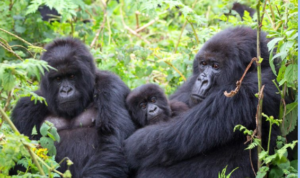
Mountain gorillas can be trekked in Uganda’s Bwindi Impenetrable and Mgahinga parks and in Rwanda’s Volcanoes National Park. Visitors hike with rangers and trackers to a habituated family and spend one hour with the animals. Success rates are very high: trekkers see gorillas on roughly 95% to 99% of treks across Uganda and Rwanda. dumaexplorer
Chimpanzees
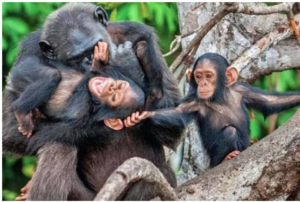
Chimpanzee tracking is offered in Uganda (Kibale, Kyambura Gorge and Budongo), Rwanda (Nyungwe) and Tanzania (Mahale and Gombe). Chimpanzees move fast and cover large areas, so encounters are less predictable than gorilla treks, but they are very rewarding.
Rules and Requirements
The minimum age for gorilla trekking is 15 in both Uganda and Rwanda. Visitors who are unwell may be refused entry, because great apes are vulnerable to human illness. Distance and conduct rules are strict and are designed to protect the animals. dumaexplorer
Wildlife Safari: The Essentials
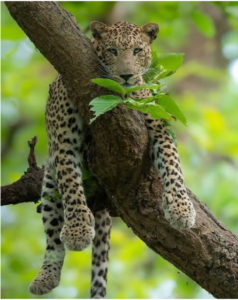
A wildlife safari typically means game drives in a 4×4 vehicle, often supplemented by boat trips, guided walks and night drives, depending on the park. The classic targets include lions, leopards, elephants, buffalo, hippos, giraffes and a wide variety of antelope and birds.
Safari parks near great ape destinations include:
- Queen Elizabeth National Park (Uganda): Tree-climbing lions in the Ishasha sector, boat trips on the Kazinga Channel and Kyambura Gorge chimpanzees nearby
- Murchison Falls National Park (Uganda): A dramatic waterfall, boat safaris on the Nile and open savanna game viewing
- Akagera National Park (Rwanda): Lions, rhinos, elephants and giraffes in a rehabilitated park, with boat safaris on Lake Ihema
- Serengeti and Ngorongoro (Tanzania): The Great Migration, the world’s largest intact caldera and large predator populations
- Masai Mara (Kenya): Concentrated wildlife and river crossings, often paired with a gorilla trip in Uganda or Rwanda
The Best Country Combinations
Uganda: The Most Complete Single-Country Option
Uganda combines gorillas in Bwindi, chimpanzees in Kibale and a range of savanna parks. A typical route runs from Entebbe to Kibale, Queen Elizabeth and Bwindi, with an optional extension to Murchison Falls. It offers the widest primate variety and, generally, lower gorilla permit costs than Rwanda.
A standard Uganda gorilla permit costs $800 in high season, or 600inthelow-seasonmonthsofApril,MayandNovember.UgandaalsooffersagorillahabituationexperienceforUS1,500 per person, allowing up to four hours with a family. Tariffs are revised periodically, so verify current rates. dumaexplorerafricansafaris
Rwanda: Compact and Convenient
Rwanda packs great apes and savanna wildlife into a small area. Volcanoes National Park offers gorillas and golden monkeys, Nyungwe adds chimpanzees and colobus monkeys, and Akagera provides Big Five wildlife. A Rwanda gorilla permit costs USD $1,500 per person, and treks can last between 90 minutes and 6 hours. The short distances and good roads make it ideal for travelers with limited time. dumaexplorerdumaexplorer
Tanzania: Migration and Remote Chimpanzees
Tanzania’s western parks, Mahale and Gombe, offer chimpanzee tracking on the shores of Lake Tanganyika. They are remote, reached by light aircraft and boat, and they pair naturally with the Serengeti and Ngorongoro for a classic northern circuit safari. This is the best combination for travelers who want the Great Migration plus a wilderness primate experience.
Cross-Border Combinations
Many travelers join Tanzania’s or Kenya’s savanna parks with gorillas in Uganda or Rwanda. This requires regional flights, usually through Nairobi, Entebbe or Kigali, and careful planning of visas and permits, but it delivers the widest range of wildlife on one trip.
Sample Itineraries
7-Day Rwanda: Great Apes and Big Game
Kigali, Volcanoes (gorillas and golden monkeys), then Akagera for game drives and a boat safari. A compact option for first-time visitors.
9-Day Uganda: Primates and Plains
Entebbe, Kibale (chimpanzees), Queen Elizabeth (game drives, boat trip, tree-climbing lions), then Bwindi (gorillas). The best balance of variety and value in a single country.
10-Day Uganda and Rwanda
Combine Bwindi and Volcanoes, add Kibale or Nyungwe for chimpanzees, and include a savanna park such as Queen Elizabeth or Akagera.
12-Day Migration and Gorillas
Spend six or seven days in the Serengeti and Ngorongoro, then fly to Kigali or Entebbe for gorilla trekking. Time it for July to October for river crossings and easier forest trails, or January to March for calving.
14-Day Ultimate Combination
Tanzania’s northern circuit, plus Mahale or Gombe for chimpanzees, followed by gorillas in Rwanda or Uganda. It is long and complex, but it covers nearly everything the region offers.
Costs: What to Expect
Permits are the main fixed cost for the primate portion, while park fees, accommodation and transfers drive the safari portion.
| Component | Typical Cost (foreign non-resident) |
| Rwanda gorilla permit | $1,500 |
| Uganda gorilla permit | About 800(600 in certain low-season months) |
| Uganda gorilla habituation | $1,500 |
| Chimpanzee tracking | Considerably lower than gorillas, varying by park |
| Savanna park fees | Vary by park and season |
For reference, a 5-day gorilla trekking safari in Uganda can cost between $2,400 and $4,500 per person, depending on accommodation quality. Adding a wildlife safari, regional flights or luxury lodges raises the total substantially, and cross-border trips cost more again. kabiraugandasafaris
Other costs to plan for include accommodation, ground transport and guides, visas, insurance, vaccinations, porters and tips. Ask for an itemized quote, because prices and tariffs change.
Best Time to Go
Great apes and savanna wildlife can both be seen throughout the year, but conditions vary.
- June to September: The main dry season. Forest trails are firmer, savanna wildlife gathers near water, and demand is highest.
- December to February: A shorter dry period with generally good conditions.
- March to May and October to November: The wetter months. Trails are muddier and some roads are harder, but crowds are smaller and rates are often lower.
No single month guarantees a better gorilla encounter, so if you are pairing the trip with the Great Migration, let the migration drive your dates. dumaexplorer
Practical Tips
Book early. Permits are capped each day. Rwanda recommends booking 3 to 6 months in advance, and peak-season camps fill up fast. dumaexplorer
Prepare physically. Treks involve altitude, steep slopes and mud. Moderate fitness is enough for most people, and porters are available.
Pack for two environments. You need waterproof boots, long sleeves and gardening gloves for the forest, and light neutral clothing, a hat and sunscreen for the savanna. A camera with a good zoom and low-light capability is useful in both.
Stay healthy. Do not trek if you are ill, keep the required distance from the animals, and consult a travel clinic about vaccinations and malaria prevention.
Check entry rules. Visa requirements vary by nationality and change over time, particularly for multi-country trips.
Insure your trip. Ensure your policy covers adventure activities and medical evacuation.
Tip appropriately. Rangers, trackers, porters and camp staff rely on gratuities.
Responsible Travel
Great ape tourism and wildlife safaris work best when they benefit both animals and communities. To travel responsibly:
- Follow park rules, including minimum distances and noise limits
- Choose operators that employ local staff and pay fair wages
- Stay at lodges that support conservation and community projects
- Avoid products made from wildlife and unregulated animal encounters
- Take litter with you and respect local customs
Permit and park fees are a direct contribution to protection, so the best trips are those where every part of the budget supports conservation.
Conclusion
Great ape trekking and wildlife safari make one of the most complete trips in Africa. Forest encounters with gorillas and chimpanzees bring a rare closeness to our nearest relatives, while savanna game drives deliver the scale and drama of classic African wildlife. Uganda offers the broadest mix in one country, Rwanda is compact and efficient, and Tanzania and Kenya add the Great Migration and remote chimpanzee parks. With early permit booking, realistic fitness preparation and a trusted operator, you can design an itinerary that balances effort and relaxation and leaves you with memories of two very different sides of wild Africa.
Key Takeaways
- Combining great ape trekking and wildlife safari gives you forest intimacy and savanna spectacle in a single trip.
- Uganda offers the widest variety and generally lower gorilla permit costs, Rwanda is compact and convenient, and Tanzania adds the Great Migration and remote chimpanzee parks.
- Gorilla permits cost about $800 in Uganda and $1,500 in Rwanda, and tariffs can change.
- Gorilla success rates are about 95% to 99%, and the minimum trekking age is 15.
- Both experiences can be enjoyed year-round, with June to September and December to February generally drier.
- Book permits 3 to 6 months ahead, and peak-season camps even earlier.
- Choose responsible operators and follow park rules to protect the animals and support local communities.
Frequently Asked Questions
- Can I combine gorilla trekking with a regular safari?
Yes. Uganda and Rwanda both offer great ape trekking and savanna wildlife in the same country, and many travelers also pair a Tanzanian or Kenyan safari with gorillas in Uganda or Rwanda. - Which country is best for combining apes and wildlife?
Uganda offers the broadest mix in one country. Rwanda is the most compact, and Tanzania is best if you want the Great Migration plus chimpanzees. - How many days do I need?
Seven to nine days for a single-country trip, ten to twelve days for a two-country itinerary, and fourteen days or more for a long, multi-destination journey. - How much does it cost?
It depends on the route and style. Gorilla permits are about $800 in Uganda and $1,500 in Rwanda, and a five-day Uganda gorilla trip can range from roughly $2,400 to $4,500 per person. Adding safari parks and flights increases the cost. - Is great ape trekking physically demanding?
It can be. Treks last from about 90 minutes to 6 hours on steep, muddy terrain at altitude. Porters are available, and guides try to match families to fitness levels. - When is the best time to go?
Both can be enjoyed year-round. June to September and December to February are generally drier, while the wetter months offer fewer visitors and often lower rates. - Can children take part?
Not in gorilla trekking, because the minimum age is 15. Savanna game drives and other activities may be suitable for younger children, depending on the lodge and park. - Do I need to book permits in advance?
Yes. Permits are limited each day, and Rwanda recommends booking three to six months ahead. Peak dates sell out early. - Is it safe to travel for ape trekking and safari?
Tourist areas in Uganda, Rwanda, Tanzania and Kenya are generally well managed. Use a licensed operator and check your government’s current travel advice before booking. - What should I pack?
Waterproof hiking boots, long sleeves and trousers, gardening gloves, a rain jacket, neutral safari clothing, a hat, sunscreen, insect repellent, binoculars and a camera for low light.
Note: Permit prices, tariffs, visa rules and park regulations change. Treat the figures here as planning estimates and confirm current details with the relevant park authorities or a licensed operator before booking.
I can also put this into a Word doc or a ready-to-publish web page if you’d like.